Taking Construction
Intelligence to the Field
From user research to shipped product: how I led the 0-to-1 build of the mobile app, uncovered a critical gap in AI-only tracking, and drove adoption among site teams.
Led the 0-to-1 build of a mobile app for a construction AI platform whose desktop product was inaccessible to the site teams who needed it most. Conducted 20+ onsite interviews across 14 projects in Israel and the UK, surfacing progress visibility at the floor and trade level as the highest-value use case. Scoped and shipped an MVP with a cross-functional team of seven, deliberately descoping offline access and exec dashboards to protect the core.
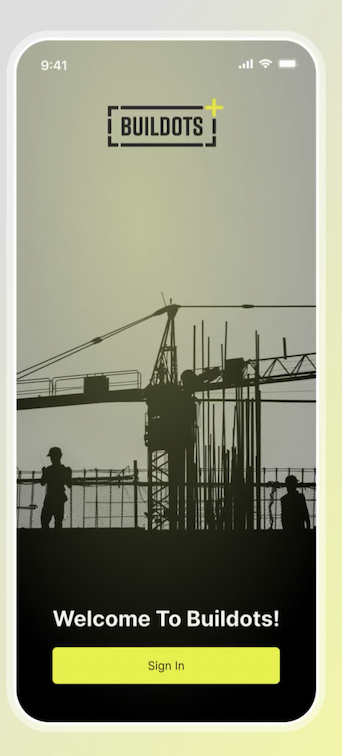
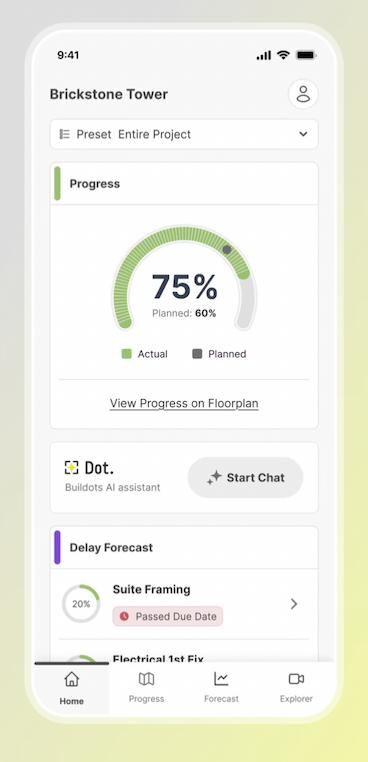
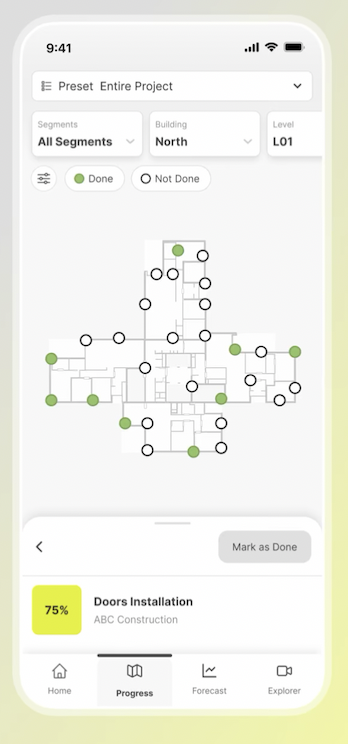
Site managers need data on the go. They're on-site all day, not at a desk.
The platform uses AI-powered scanning to automatically track construction progress across large sites. The core product lived on desktop - but the people who needed it most, site managers, superintendents, foremen, spent their days on the floors, not at computers.
They were managing complex, high-stakes projects from memory and fragmented tools. The information existed in the platform. It just wasn't accessible at the moment it was needed.
20+ interviews. Two countries. One clear signal.
I led onsite discovery interviews across Israel and the UK, speaking with site managers, superintendents, BIM engineers, and project managers across 14 active construction projects.
The goal was to understand what questions site teams were actually trying to answer while walking a building - not what features they thought they wanted.
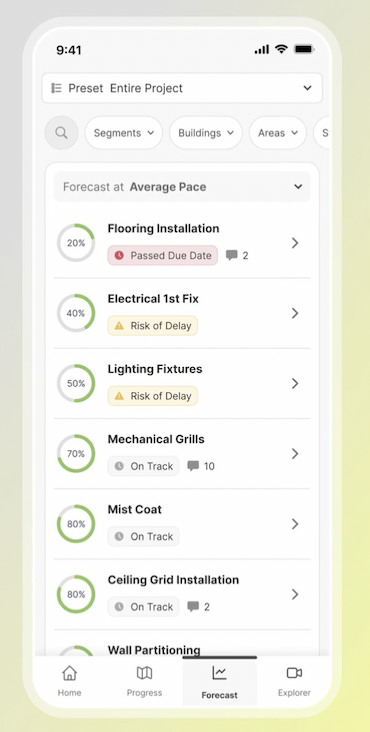
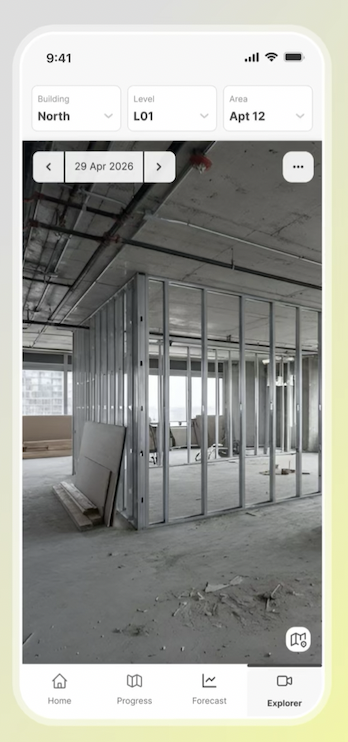
Seeing what was left to do in a specific location was the highest-value use case, mentioned unprompted by seven clients. Having everything consolidated in one place was described as a potential "life changer." I synthesized these findings and presented them to the C-suite, resulting in a go-decision for the mobile app.
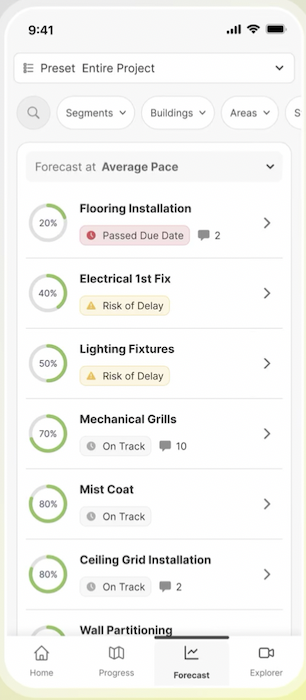
Finding the gap the product didn't know it had.
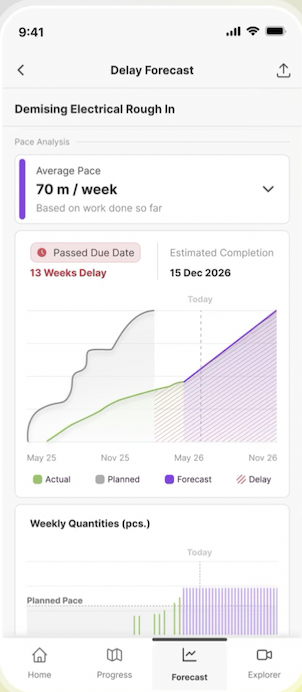
The research surfaced something that didn't require a mobile app to fix immediately. Users were losing trust in the product's completeness because a meaningful portion of each project fell outside what the AI could automatically detect.
I initiated a discovery process around this gap and drove the launch of manual activity tracking, letting site teams log progress the system couldn't capture on its own. This expanded coverage strengthened the core value proposition and lifted engagement by 23%.
Scoping the MVP
I led a cross-functional team of seven across design, engineering, and data to scope and ship the first version. The research had generated a long list of legitimate user needs - almost all of them real. The job was deciding what to cut without compromising the core reason someone would open the app in the first place.
We shipped an experience built around progress visibility at the floor and trade level: the use case with the clearest evidence behind it. Offline access, exec dashboards, and work plan views were explicitly descoped, each with documented reasoning. The app launched to beta clients and drove a 17% increase in adoption among the site team persona.
"The most important skill on this project wasn't research or roadmapping. It was being willing to name what the product couldn't yet do - and building the case for addressing it anyway."
The manual tracking initiative came from staying honest about a gap rather than defending existing scope. That decision, not the mobile app itself, turned out to be the more durable contribution.